Pothole Season Doesn't End in Spring. Are You Fixing the Problem, or Just Buying Time?
Pothole Season Doesn't End in Spring. Are You Fixing the Problem, or Just Buying Time?
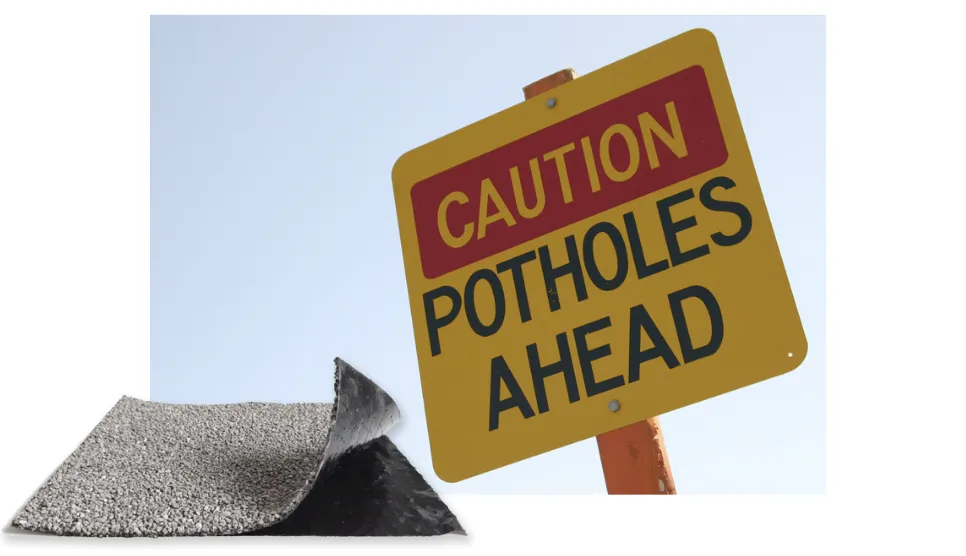
It is early June, and while the calendar says summer, the roads tell a different story. The freeze-thaw damage inflicted over winter and spring does not disappear when the temperatures rise — it compounds. Potholes that were filled in March are already failing. Cracks that were patched in April are widening. This is the season when the true cost of temporary repairs becomes impossible to ignore.
Across the country, the headlines are painting a grim picture. From the Midwest to the coasts, cities are battling an epidemic of crumbling infrastructure. In Lansing, Michigan, the city faces an estimated $300 million in road repair needs, while their proposed budget allocates only a fraction of that amount [1]. Meanwhile, a recent report by LendingTree highlighted that nearly 1 in 11 U.S. roads are in poor condition, with states like Rhode Island, California, and Massachusetts leading the pack in infrastructure decay [2].
The financial toll is staggering. According to the American Automobile Association (AAA), pothole-related vehicle damage costs U.S. drivers approximately $3 billion annually [3]. And on a macro level, the American Society of Civil Engineers (ASCE) recently gave American road infrastructure a dismal "D+" grade, noting a repair backlog approaching $700 billion [4]
We are losing the war on potholes. But the problem isn't just a lack of funding—it's a fundamental flaw in how we repair our roads.
The Cycle of Failure
Why do the same potholes reappear year after year? Because traditional repair methods are trapped in a cycle of temporary fixes.
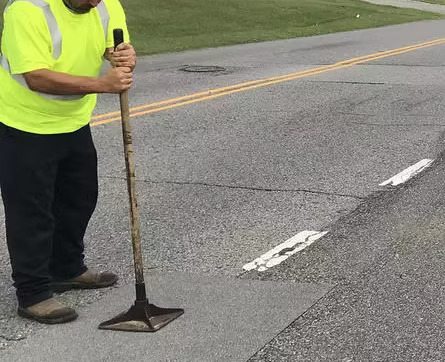
When a pothole forms, crews are dispatched to fill it with asphalt. It looks fixed. It feels fixed. But beneath the surface, the repair is vulnerable. Traditional fills do not create a watertight seal. The moment it rains, water seeps into the microscopic cracks around the edges of the patch. When temperatures drop, that water freezes and expands, breaking the repair apart from the inside out. Traffic pounds the weakened surface, and within weeks or months, the pothole is back—often larger and more dangerous than before.
As we noted in a previous post, Your Road Repair Budget Is Being Washed Away, without a perfect, waterproof seal, every dollar, every man-hour, and every ton of asphalt is merely a temporary investment.
You wouldn't lay tile in a bathroom and skip the grout. You wouldn't frame a roof and forget the shingles. So why are we filling potholes without sealing them?
The Definitive Solution: American Road Patch
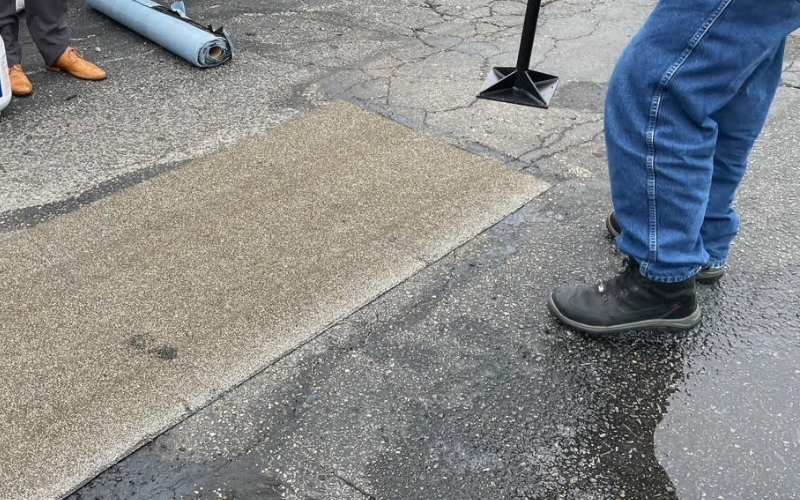
This is where American Road Patch (ARP) changes the game.
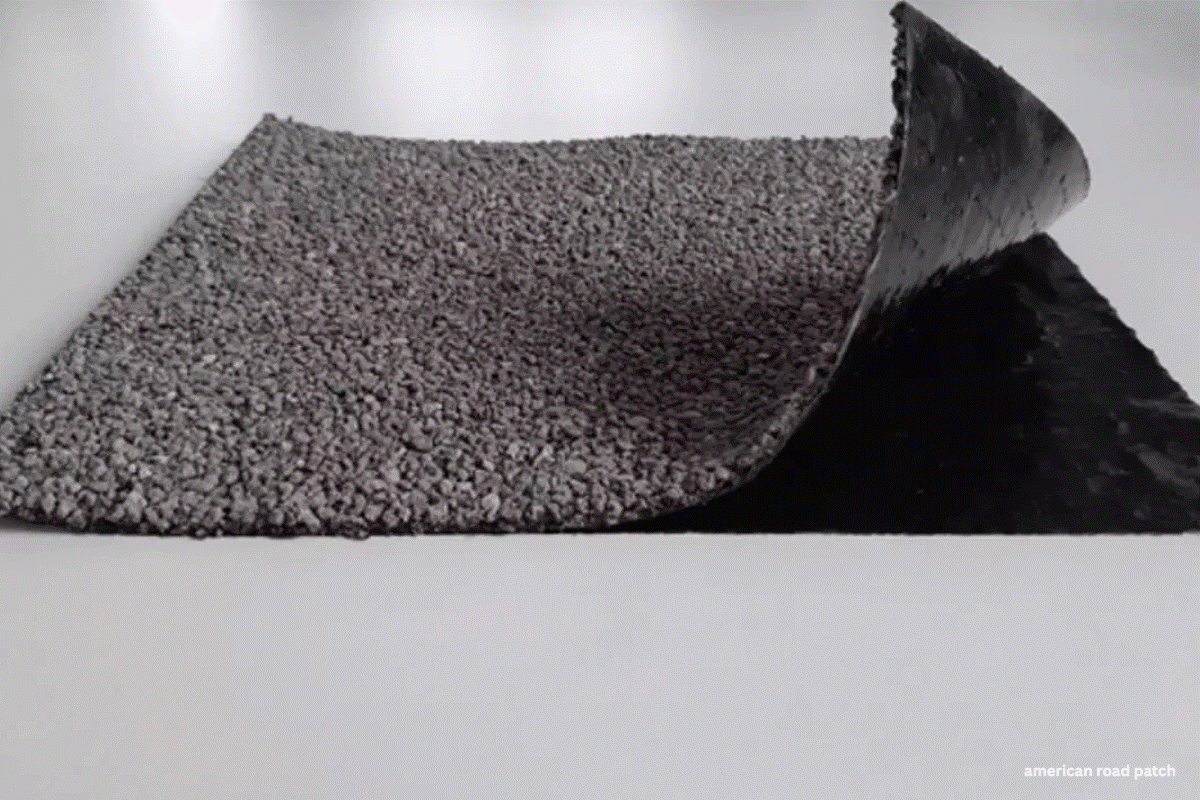
American Road Patch is not a replacement for your current fill materials. It is the essential final step that makes your repairs permanent. It is a patented, peel-and-seal technology that creates a watertight, reinforced bond over new pavement repairs.
Here is why American Road Patch is the definitive solution to the pothole crisis:
It Stops Water Infiltration: ARP creates an impermeable barrier over the repair. If water can't get in, the freeze-thaw cycle can't destroy the patch.
It Reinforces the Repair: Made with a high-strength fiberglass grid, ARP bonds seamlessly to both asphalt and concrete, adding structural integrity to the repaired area.
It Extends Lifespans Exponentially: Repairs that typically last weeks or months can last upwards of 10 years when sealed with American Road Patch.
It is Plow and Sweeper Resistant: The low-profile design and strong bond mean snowplows and street sweepers glide right over it without causing damage.
It Saves Millions: By eliminating the need for repeat repairs, municipalities can stretch their tight budgets further and tackle the massive backlog of infrastructure needs.
Discover why this missing step could save you millions.
Proven in the Real World
We don't just make claims; we have the data and the real-world results to back them up.
In independent testing at the National Center for Asphalt Technology (NCAT), American Road Patch endured 1.3 million Equivalent Single Axle Loads (ESALs)—the equivalent of years of heavy truck traffic—and maintained safe friction levels throughout.
But the real proof is on the roads:
Duluth Airport Authority Taxiway (Minnesota): A hub for F16 fighter planes was constantly refilling potholes. We installed ARP in 2019. Today, after multiple seasons of snowplows, ice, and heavy airplane traffic, the patches remain unscathed.
Heavy Load Roads (Versailles, Indiana): A UPS center was experiencing recurring potholes from semitrucks carrying up to 80,000 pounds. ARP was installed in 2019. All patches are still intact, and no further cracking has occurred.
Buenos Aires Bridges (Argentina): In a massive 2,700 m² project, American Road Patch was installed on five critical metal bridges. Thirteen months later, the project received a certificate of good performance from the relevant authority, proving its world-class reliability under intense, high-traffic pressure.
Read the full details of these and other incredible Case Studies here.
Don't Just Fill It. Seal It.
As we move deeper into summer and repair crews work through the backlog of damage left behind by another brutal winter and spring, the definition of insanity is doing the same thing year after year and expecting different results. It is time to stop pouring money into holes in the ground only to watch them wash away.
Whether you are a city engineer facing a $300 million repair backlog, a DOT official trying to stretch a limited budget, or a contractor looking to provide lasting value to your clients, American Road Patch is the solution you've been looking for.
You don't fill a pothole without American Road Patch. It is a complement—but an absolutely necessary one.
Ready to make your repairs permanent?
Contact us today to learn more or to find a distributor near you.
References
[1] Lansing City Pulse. (2026). New state funding barely fills gaps for Lansing's road repair needs. Retrieved from https://news.jrn.msu.edu/2026/04/new-state-funding-barely-fills-gaps-for-lansings-road-repair-needs/
[2] AOL / Peoria Journal Star. (2026). It's pothole season. See which states have worse roads than Illinois. Retrieved from https://www.aol.com/news/pothole-season-see-states-worse-112145995.html
[3] Automotive Fleet. (2026). Potholes Causing $3B in Damage Each Year. Retrieved from https://www.automotive-fleet.com/news/potholes-causing-3b-in-damage-each-year
[4] Yahoo News. (2026). Op-Ed: Congress must avoid highway policy potholes. Retrieved from https://www.yahoo.com/news/articles/op-ed-congress-must-avoid-161600467.html